
Notebooks
A notebook is the heart of Kyonote. It's one place that holds the material for a single subject — and it's the source for every podcast, listen, flashcard deck, quiz, and mock exam Kyonote makes.
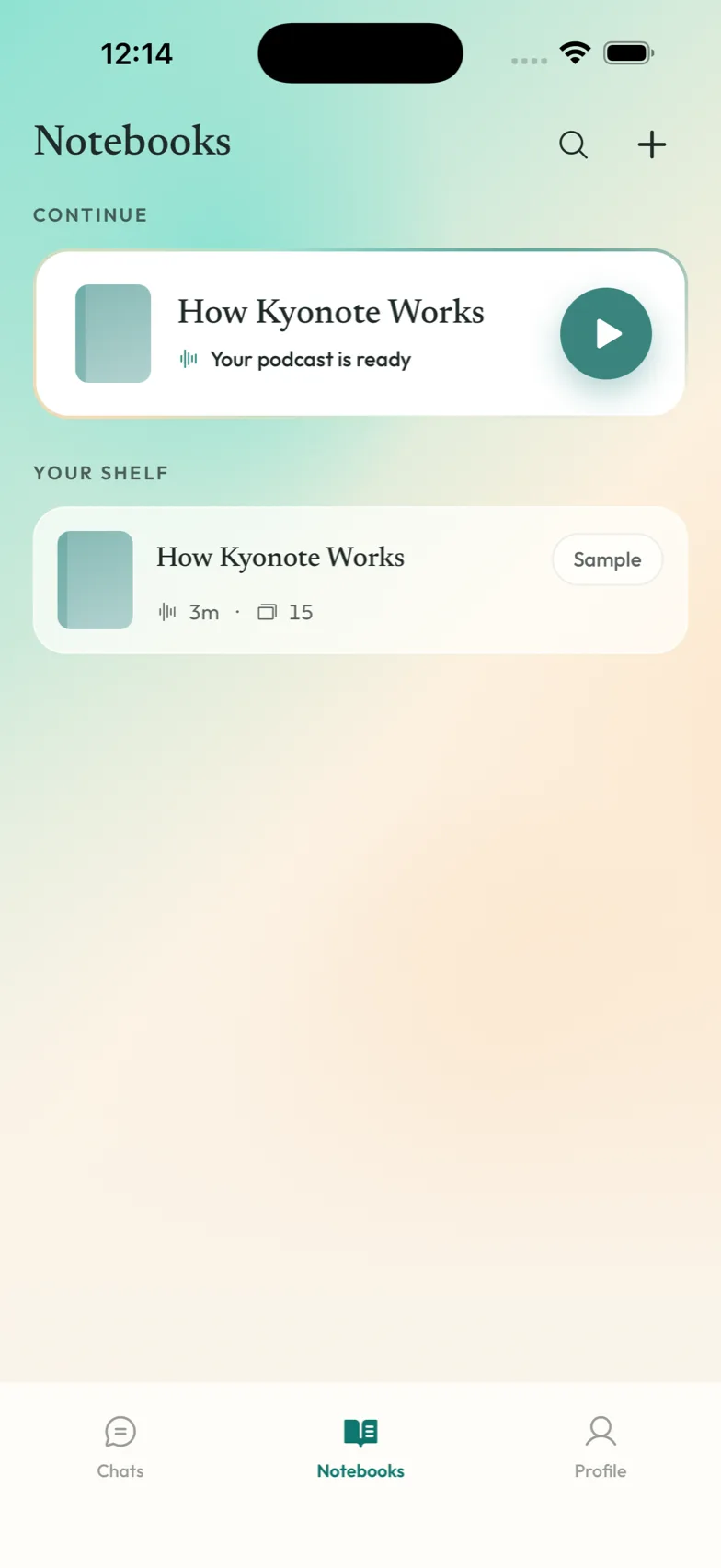
What a notebook is
Think of a notebook as one course, one exam, or one topic you're working through. Inside it go your files — PDFs and your own notes — and out of it come your study tools.
Everything Kyonote makes is grounded in the files in that notebook. A podcast for your Biology notebook only talks about what's in Biology. A quiz only asks about what you put in.
One notebook per subject
The tidiest way to use Kyonote is one notebook per subject:
- Biology, History 101, Organic Chemistry — each its own notebook.
- Keep a subject's readings, slides, and notes together in one place.
- When exam season hits, you know exactly where each thing lives.
Mixing several subjects into one notebook makes the output muddier — a podcast that jumps between cell biology and the French Revolution isn't much of a study partner.
How focused should it be?
More focused is better. A single chapter or a single lecture's worth of material gives you a sharper podcast and listen, tighter flashcards, a more useful quiz, and a stronger mock exam than a whole textbook dumped in at once.
If a subject is big, it's fine to make a few notebooks — one per unit or per week — rather than one giant one.
Renaming and tidying up
You can rename a notebook any time, and remove notebooks you're done with. Removing a notebook removes its files and the tools made from it — see Privacy & your data for what happens to your data.
Next steps
- Add files — bring PDFs and notes into a notebook.
- Study tools — what Kyonote makes from a notebook.