How to cram for an exam the night before (smartly)
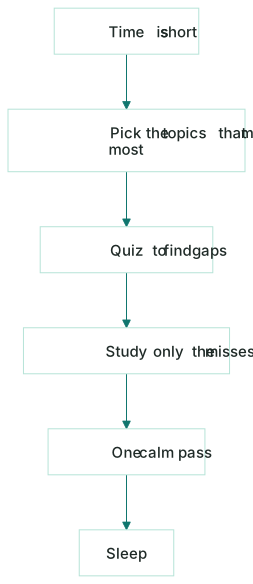
How to cram for an exam the night before without wasting hours: triage what matters, quiz to find gaps, one calm audio pass, then sleep. Plan B, done right.
The smart way to cram for an exam the night before is to stop trying to learn everything. Triage to the few topics most likely to be tested, quiz yourself to find your real gaps, do one calm audio pass over the material, then sleep. That's the whole plan, and it beats a panicked all-nighter every time.
Let's be honest up front: cramming is plan B. Studying a bit over several days, with breaks between, will always beat one frantic night. If you've got time, build a study routine that sticks instead.
But sometimes life happens. The exam is tomorrow. So here's how to make one night count without burning out.
First, accept what cramming can and can't do
Cramming is damage control, not deep learning. Keep your expectations honest and you'll make better calls tonight.
What it can do:
- Get the big, high-value topics fresh in your head.
- Surface the gaps you didn't know you had.
- Give you a fighting chance on the topics most likely to show up.
What it can't do:
- Make it all stick for the final later. (For that, see the forgetting curve.)
- Cover everything equally well in a few hours.
- Replace sleep.
The single biggest cramming mistake is trying to review all of it. You can't. So don't. Pick what matters and do that part well.
Step one: triage like an ER doctor
Before you study a single thing, spend ten minutes deciding what to study. This is the step most people skip, and it's the one that saves the night.
Grab your syllabus, the study guide, or last year's exam if you have one. Then sort every topic by two questions:
- How likely is this to be on the test? Things the professor repeated, review-session topics, big chapters, anything flagged as "important".
- How shaky am I on it? Be brutally honest. The stuff you already know cold doesn't need much.
The sweet spot is high-likelihood plus shaky. That's where your hours pay off. Make a quick ranked list, top to bottom, and work down it. When you run out of time, you'll have spent it on what mattered.
Skip the low-likelihood, you-already-know-it stuff entirely. Tonight is not the night for completeness.
Step two: get your material into one place
You can't triage what's scattered across six PDFs, a notes app, and three browser tabs. Pull it together first.
If you're using Kyonote, make one notebook for the exam and drop everything in: the lecture PDFs, your typed notes, the slides, the study guide. Now it's one source instead of a pile. (More on this in how to organize your study notes by notebook.)
The point is simple: you want to spend the night studying, not hunting for files at 11pm.
Step three: quiz to find your gaps, don't re-read
Here's where most crammers waste the night. They re-read notes, feel the warm glow of "yeah, I know this", and walk into the exam having learned almost nothing.
Re-reading is a trap. It builds familiarity, not memory. You recognize the words on the page, so you assume you can produce the answer cold. The exam asks you to produce it from a blank page. (Why re-reading your notes doesn't work goes deeper on this.)
The fix is to test yourself instead. Quizzing forces you to pull answers out of your own head, and that effort is what actually builds memory. It's called the testing effect, and it's one of the most reliable findings in learning science (Roediger and Karpicke, 2006). Even better for a crammer: every wrong answer is a flashing sign that says "study this".
So go top-down through your triage list and quiz, don't read:
- From your notebook, generate a quiz on your material. Start at the mixed level, then go hard once you're warm.
- For fact-heavy topics (terms, dates, formulas), run flashcards and try to answer before you flip.
- Mark what you miss. That's your real study list for the rest of the night.
A practice quiz from your own notes is the fastest way to see the truth about what you know. Walk through it in quiz yourself before the exam does, and see how to make a practice quiz from your own notes for the setup.
This is the heart of a smart cram. Active recall does more in one tired hour than re-reading does in three. There's a fuller explanation in active recall: the study method that actually works.
Step four: one calm audio pass
Once you've found and patched the worst gaps, give yourself a single low-effort pass over the whole thing to lock in the shape. The goal here is connection. Not new cramming, just how the pieces fit together.
This is where audio earns its keep at the end of a long night when your eyes are done. From your notebook, turn the material into a podcast and just listen. It's a two-host conversation that talks through your notes, so it's easier to follow than re-reading a wall of text when you're fried.
Free episodes run up to 10 minutes, which is about right for one calm review pass. Play it while you brush your teeth and get ready for bed. (Turn any PDF into a podcast covers how it works.)
One pass. Don't loop it ten times trying to absorb more. By now the work is done, and the next best thing you can do is stop.
Step five: actually sleep
This is the step crammers fight. It's also the one that matters most. Do not pull an all-nighter.
Sleep is when your brain consolidates what you just studied, moving it from "I saw this an hour ago" toward "I can recall this". Skip it, and you walk in tired, fuzzy, and quicker to panic when a hard question hits.
The math is simple: one more groggy pass through your notes is worth less than a few solid hours of sleep that locks in what you already covered. Set an alarm with a little buffer, and go to bed.
If you've got time the next morning, a quick re-quiz on your weak spots beats opening your notes fresh. (How to study without burning out is worth a read for the longer game.)
A simple one-night plan
If you only remember one thing, remember the order. Here it is start to finish:
| Time block | What you do |
|---|---|
| First 10 min | Triage: rank topics by likely-on-test and how shaky you are |
| Next 10 min | Pull all your material into one notebook |
| Bulk of the night | Quiz and flashcard top-down; mark what you miss; restudy the gaps |
| Before bed | One calm podcast pass over the whole subject |
| Then | Sleep. A real amount of it |
Notice what's missing: hours of highlighting and re-reading. That's on purpose.
The honest takeaway
Cramming the night before can save you, but only if you cram smart: triage hard, quiz to find gaps, one calm audio pass, then sleep. Trying to learn it all is what sinks people.
And then, after the exam, make a deal with yourself. Cramming is plan B. The way to never need it again is small, regular study over time, which you can set up with a study schedule you'll actually follow.
For tonight, though, drop your files into a notebook, quiz yourself on what matters most, listen once, and get some sleep.
Frequently asked questions
- What is the best way to cram for an exam the night before?
- Triage first: list the topics by how likely they are to be tested and how shaky you are on each, then work top-down. Spend most of your time quizzing yourself to find gaps, not re-reading. Do one calm audio pass to lock in the shape, then sleep. Trying to cover everything equally is what wastes the night.
- Should I pull an all-nighter to study?
- No. Skipping sleep usually costs you more than the extra hour buys. Sleep is when your brain consolidates what you studied, and a tired brain recalls worse and panics easier. A few solid hours of sleep beats one more groggy pass through your notes.
- Does cramming actually work?
- Cramming can get you through a test, but it does not build lasting memory, and it is always plan B to spaced studying over time. If you have one night, the goal is damage control: cover the highest-value topics well rather than everything badly.