How to study hard without burning out
How to study hard without burning out: take real breaks, protect your sleep, set clear boundaries, and go lighter on low-energy days instead of quitting.
Studying hard without burning out comes down to four things: take real breaks, protect your sleep, set boundaries on when you study, and go lighter on low-energy days instead of quitting. That's the whole playbook.
Here's the thing. Burnout doesn't usually come from studying too hard for one day. It comes from grinding flat-out for weeks with no recovery, then crashing right before it matters.
The fix isn't to study less. It's to study in a way you can actually keep up.
Take breaks that actually rest you
Most people don't take real breaks. They "take a break" by switching from notes to TikTok, which is just trading one screen for a more addictive one.
A real break lets your brain idle. Try this:
- Work in focused blocks (25 to 50 minutes), then break for 5 to 10.
- Stand up. Walk to another room. Look out a window.
- Get water or a snack. Stretch.
- Avoid feeds and notifications during the break. They don't rest you.
After about three or four blocks, take a longer break (20 to 30 minutes). Eat something, go outside, talk to a person.
Breaks aren't slacking. They're what lets the next block actually work. Your focus has a tank, and breaks are how you refill it.
To study hard without burning out, protect your sleep
This is the one people sacrifice first, and it's the worst one to cut.
Sleep is when your brain consolidates what you learned that day, moving it from "I saw this once" to "I actually know this." Skip the sleep and you're skipping the part where the studying sticks.
So:
- Don't trade sleep for cramming. A rested brain learns faster than a tired one grinds.
- Stop hard study an hour before bed so your brain can wind down.
- A short morning review beats an extra hour at 1am almost every time.
If you only change one thing on this list, make it sleep. It quietly powers everything else. It's also deeply tied to the forgetting curve: what you don't reinforce, you lose, and sleep is part of how you hold on to it.
Set boundaries so studying has an off switch
Burnout loves blurry edges. When "I should be studying" follows you around all day, you never actually recover, and you never feel done.
Give studying a start and a stop:
- Pick set hours. When they're over, you're off. Genuinely off.
- Study in one spot, not in bed. Keep your bed for sleep.
- Put your phone in another room during blocks so you're not half-studying for three hours.
- Decide what "done for today" looks like before you start, so you can actually hit it.
Boundaries sound restrictive. They're the opposite. They protect the rest of your life, which is what keeps you sane enough to come back tomorrow.
A plan with edges beats a vague 'study more.' Decide your hours, decide your stop, and let the rest of the day be yours.
Go lighter on low-energy days, don't skip
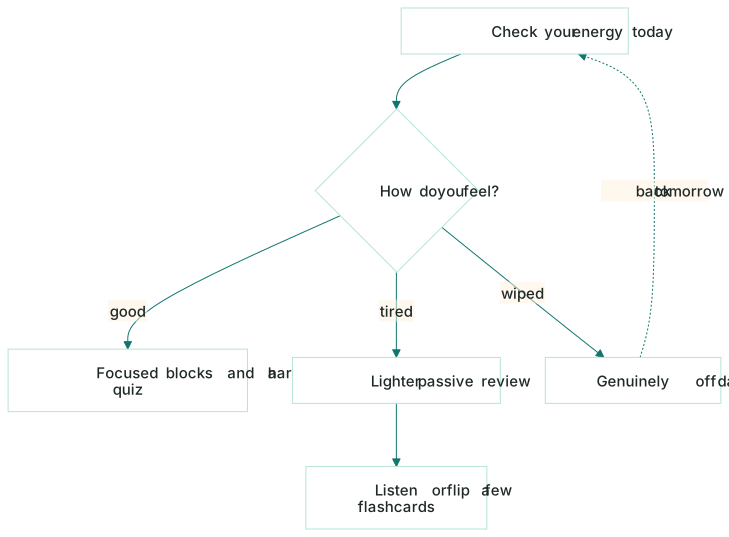
Some days you're wiped. Bad sleep, long shift, brain fog. The instinct is to skip entirely. Then guilt makes the next day harder too.
Better move: shrink the session, don't cancel it.
On a low-energy day, switch to passive review:
- Listen instead of read. A podcast or audiobook version of your notes keeps the material warm while you rest your eyes.
- Flip a handful of flashcards instead of grinding new chapters.
- Take a gentle, low-stakes quiz just to keep things fresh.
This is where having your notes in an audio format pays off. With Kyonote, you drop your PDF or lecture notes into a notebook and it can make a podcast from your notes, a two-host conversation that walks through your material, plus an audiobook read-aloud you can play on a walk.
So a low-energy day becomes a 20-minute listen on the couch instead of a guilty zero. You keep the streak, protect the routine, and don't pay for it tomorrow.
If reading just isn't landing lately, lighter active methods help too. Flashcards that build themselves and a quick quiz ask your brain to recall without the heavy lift of plowing through dense text.
Watch for the early signs of burnout
Burnout doesn't announce itself. It creeps in. Catch it early and you can adjust before you crash.
Warning signs to watch for:
- You're studying for hours but nothing sticks.
- You dread opening your notes, every time.
- You're irritable, foggy, or weirdly tired even after sleep.
- You keep cramming the same page and re-reading without it sinking in.
That last one is a trap. Re-reading feels productive but does very little, which is why re-reading your notes doesn't work. When you're fried, you fall back on it because it's easy, and then you spin your wheels for an hour.
If you spot these, don't push harder. Pull back. Take a real day off. Sleep. Then come back with shorter sessions and lighter methods until your energy returns.
A simple sustainable week
You don't need a perfect system. You need one you can repeat. Here's a rough shape:
| Day | Energy | What to do |
|---|---|---|
| Good day | High | Focused blocks: new material, active recall, a hard quiz |
| Normal day | Medium | A couple of blocks, flashcards, a mixed quiz |
| Low day | Low | Passive review: listen to a podcast or audiobook of your notes |
| Off day | Recharge | Genuinely off. Sleep, move, see people |
The goal isn't to study the most hours. It's to still be standing (and still actually learning) when the exam arrives.
Study hard. Just build in the recovery that lets "hard" last more than a week.
The methods that make less time go further are the same ones that protect you from burnout: short active sessions over long passive grinds. Build the recovery in, and you can study hard for a whole term.
Frequently asked questions
- How long should I study before taking a break?
- A common rhythm is 25 to 50 minutes of focused work, then a 5 to 10 minute break. The exact numbers matter less than the pattern: short, honest breaks where you actually step away from the screen. If 50 minutes feels long, start at 25 and build up.
- Does pulling all-nighters help before an exam?
- Usually not. Sleep is when your brain consolidates what you learned that day, so trading sleep for extra cramming often backfires. You retain less and think slower the next morning. A solid night plus a quick morning review almost always beats studying until 3am.
- What should I do on days I'm too tired to study hard?
- Switch to lighter, passive review instead of skipping entirely. Listen to a podcast or audiobook version of your notes, or flip through a few flashcards. You keep the material warm without burning energy you don't have, and you protect your routine.