
One notebook, three ways to study
Same notes, three ways in: a podcast for the first pass, flashcards for recall, a quiz to find the gaps. Here's how to study one notebook from every angle.
You don't learn things one way
Think about how you actually came to know anything well. You heard it, then you tried to use it, then you got it wrong a few times and fixed it. Not one pass. Several, from different directions.
Studying works the same way. But most tools only give you one door in. You read the notes, and that's that. The problem is that reading is the weakest of the bunch. It's comfortable, it's passive, and it's very good at making you feel ready before you are.
Kyonote's bet is simpler. Keep your material in one place, then walk in through three different doors (listening, recall, and testing) because each one teaches a different thing.
The notebook is the source of truth
It starts with a notebook. One per subject, or one per exam, whatever matches how your brain files things. Drop in the PDFs, paste your lecture notes, add your own scribbles. That's the whole setup.
Everything else comes from here. The podcast, the flashcards, the quiz: they all read the same notebook, so they all stay grounded in what you're actually being tested on. Update your notes and the tools follow. You're never studying a copy that drifted out of date.
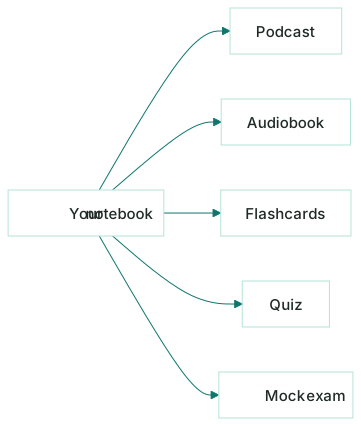
Three ways out of one notebook
- Podcast, the first pass. Before you've memorized anything, you just need the shape of the topic in your head. A two-host episode is perfect for that. Put it on for the walk to campus and arrive already knowing how the pieces fit together.
- Flashcards, active recall. Once the shape is there, you need the details to stick. A deck built from your notebook makes you retrieve each one cold. That's the move that actually shifts something from "seen it" to "know it."
- Quiz, find the gaps. When you think you're done, a short quiz tells you the truth. Whatever you miss is your real to-do list, and it's usually shorter and more specific than "study everything again."
Same source, three jobs. The podcast builds the map, the flashcards fill it in, the quiz checks it for holes.
A simple weekly loop
You don't need a system. You need a rhythm, and this one fits a normal week:
- Monday. Make a podcast from the week's notebook and listen on the way in. First pass, done while commuting.
- Mid-week. Run the flashcards in five-minute bursts between classes. Short and often beats one long cram.
- Exam eve. Take a hard quiz. Whatever stings is exactly what to review, and nothing else.
One notebook, three angles, no late-night panic. Drop in your notes and try studying the same thing three ways.
Frequently asked questions
- What's a notebook in Kyonote?
- A notebook is where your study material lives — one per subject or per exam. You drop in PDFs, paste lecture notes, and add your own scribbles. Everything Kyonote makes for you is built from that notebook.
- Do the podcast, flashcards, and quiz use the same notes?
- Yes. All three read the same notebook, so they stay grounded in exactly what you're being tested on. Update your notes and the tools follow — you're never studying a copy that drifted out of date.
- Is Kyonote free?
- Kyonote is free to start on iOS and Android. The free tier covers regular study — for example, podcast episodes up to 10 minutes — and Pro raises the limits, such as 30-minute episodes, for heavier use.